
ProseI love all forms of writing. Whether it be creative, narrative projects or academic essays, I always find the time to express myself through language.
It’s my dream to work in the literary sector, and I’d love an opportunity to try both journalism and publishing to diversify my resume and expand my knowledge.
I’d love for you to reach out to me about any available opportunities on my socials:
LinkedIn: Clara Mathieson-Spires
Email: claramspires@gmail.com
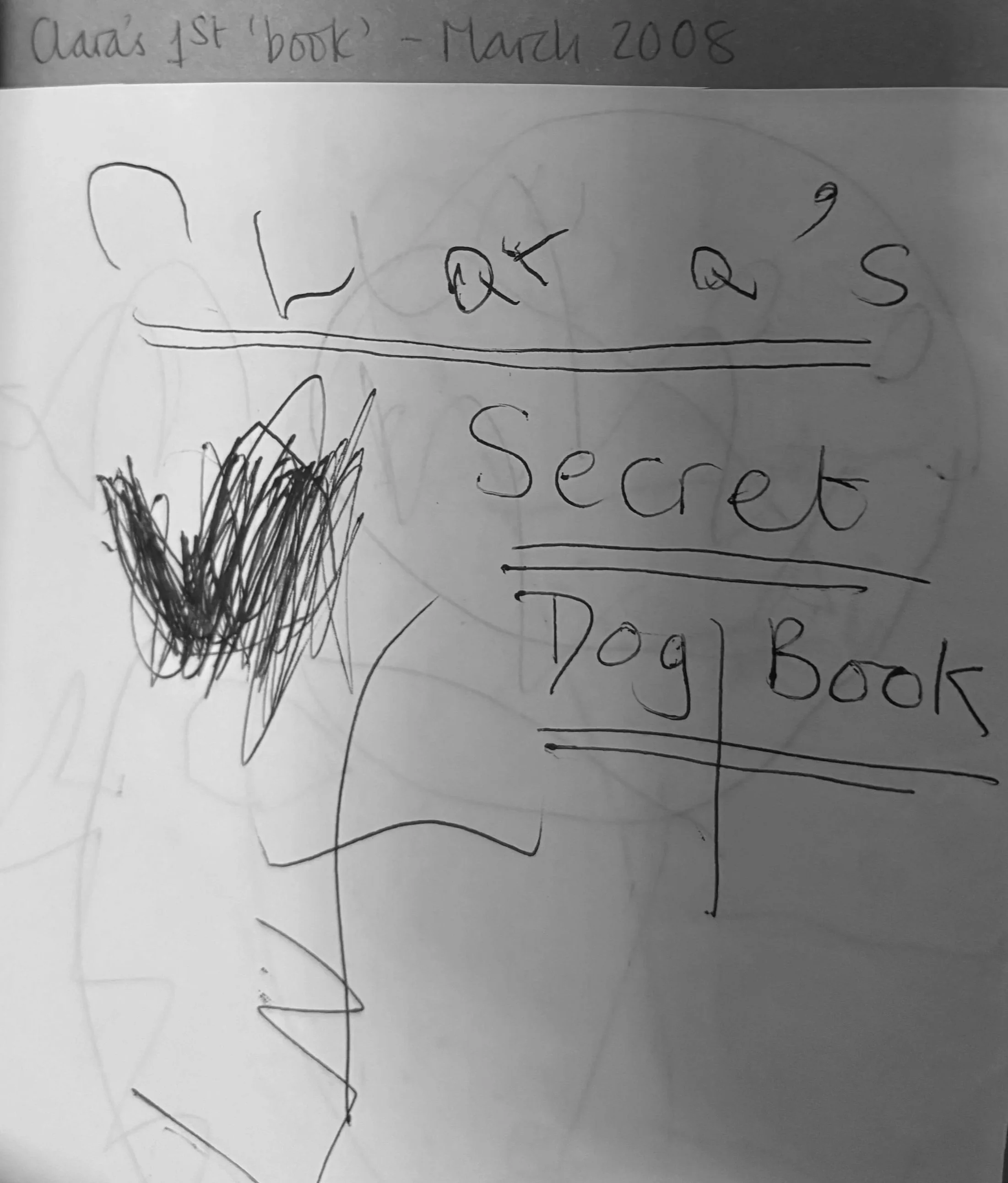
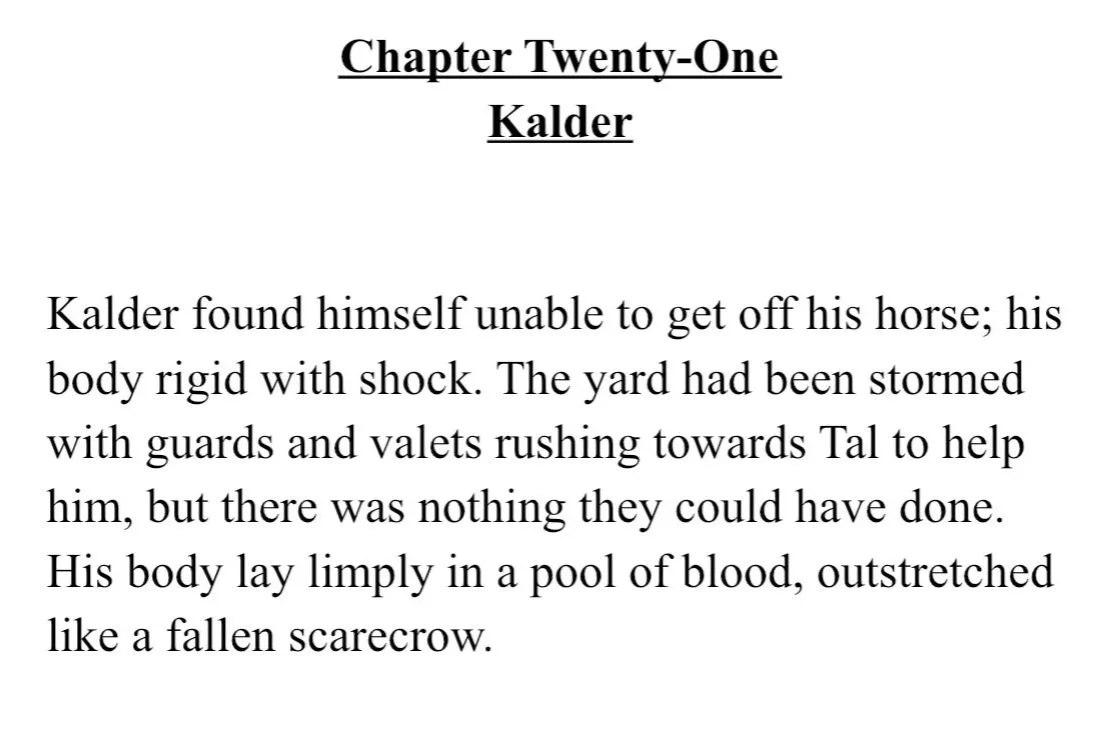
From little picture books to drafting full fantasy-epics, I have always loved writing.
Creative Writing
Here you’ll find snippets of my work. For the full piece, please don’t hesitate to reach out!
‘Your only conversations now are listening to the ark-birds squawk, hoping that they might learn to copy you, and comforting the growing disillusionment of your family as they watch the eternal sea with fearful eyes. You could speak to your master, but you hear his voice in the crashing waves and in the constant rain, and that is enough of Him. So you think, but never say. Because if your faith falters for a moment, then this will have all been for nothing. Sacrificing everything for the being who created you, but yet who drowned the humanity that molded you. Nurtured you.
The far-away touch of your mother stroking your temple makes you wonder if you chose the wrong sanctuary. This ark is far less comforting, much less warm. And it is certainly not unconditional. If you had been a different man before the storm, then you would now be a broken fish like the rest of them. But to your mother, you would have still been loved.
There were hopes and dreams down there, and now they are water-clogged and shark-bitten, and you wonder if you should build your house out of stone or wood when everything dries. Fear and faith are not just two four-letter words beginning with f, but instead fraternal twins; reflections, refractions and reliant on each other. This is what your Lord has shown you.
You put faith in your master that he will not use his force against you. That he will not cast a watery hand against your children. That he will not stifle their laughter, or their rage. That he will not make them dilute with creed. You will be an ancestor to a watered-down humanity who live in fear of their greatest protector. Their mold will not change: instead their violence and their anger will be used in His name, and anything different will be drowned by dogma.
You are just a loyal hound, you think to yourself, as your nails blacken cleaning out the ark and your skin leathers in the salt of the breeze. Your toes cut trenches into the sole of your sandals, groping for dirt. You’ve been calling it a flood, but in every way it has been a drought.’
Noah, and the loneliness of a godly manA short story questioning faith. Here’s a snippet:
TBC (Fantasy epic)Inspired by imagined world of my childhood, I have a three book fantasy series planned, 9 years in the works, with the first book in second draft. Here’s a snippet.
“Why the need for so many secret paths and hiding places then Sir Tolk? That’s what I don’t understand” Kalder interrupted, desperate to know.
Tolk stared at him for a moment, his eyes still twinkling. Kalder continued.
“You said once that there was probably hundreds of secrets in this Castle- I only know of a couple places; the fake door on the first floor, or the trapdoor near the kitchen that leads to a little hidden cupboard with a window overlooking the forest,” he thought about mentioning the woodland path, but decided not to, “If the Kalloways were so intent on impressing and demonstrating their power and all-seeing eye- why hide things? Why sneak around?”
He finished with a deep breath. Tolk sat very still in his chair, the lines of his face turning kindly.
“Tell me, young Prince,” he began, his voice softening to a whisper, “tell me what your family are like”.
Kalder stared at him.
“I don’t understand”
“Your family- what is it like to be a Kalloway?”
Kalder didn’t know what the old man wanted to hear from him. He was beginning to feel frustrated. All he wanted to talk about was the hidden secrets of the castle. Why was Tolk suddenly interested in his personal life?
“I don’t know- and I don’t understand why-”
“Why then, little Prince, do you go looking for places to hide?”
Kalder thought for a moment, and bit his lip.
“To have some time to myself,” he replied shyly.
“That’s exactly it, young Prince! You seek out hidden places so that you can hide from your family; your father, your mother, your grandfather and from all the pressures that come with being a member of the family!” Tolk explained.
Kalder stared at him.
“Those same feelings have been shared by Kallowegians for generations! Power, wealth, royalty- these things raise us to a pedestal where we are viewed by all! Where do those who want an inch of privacy go? They find places to hide”
“So that’s why there’s secret passages and rooms”, asked Kalder thoughtfully, “but then why would someone make hundreds, like you say, why the need for so many?”
“Ah” sighed Tolk, “perhaps there is more than one reason to hide away- maybe one with not quite so innocent intentions”
“Why is that?”
Tolk moved slowly towards Kalder, until his eyes were merely centimetres away from him. He dropped his voice down to a whisper.
“There are things which I am not meant to teach you” he spoke solemnly, not breaking eye contact with Kalder, “things in history which I am meant to rewrite. You’re a bright boy, Kalder. How do you think the Kalloways went from rich men to Kings?”
Kalder thought for a moment, reflecting on what he had learned inside this very room. How Dagre Kalloway split an ancient Kingdom into two for the benefit of his son four hundred years prior, betraying his niece, the Queen. He felt the hairs on the back of his neck stand up.
“Through deceit” he responded quietly.
The dark shadows of the room which had originally been comforting- another little place to hide- became bathed in hostility. The library felt as though it had grown ears in every nook and cranny, craning in to hear the hushed conversation. Kalder shuddered.
“For as long as the Kalloways have been famous- they have been famous for one thing in particular” Tolk whispered.
“What is that, Sir Tolk?”, Kalder ushered, goosebumps growing on his arms.
“This is not a family. This is a battleground” Tolk finished, the seawater of his eyes eerily still and calm.
The child-like wonder and curiosity about Krillye Castle’s secrets was replaced with fear and shock. Kalder thought he understood now. These passages and rooms were not the adventurous, playful things they had been in his childhood. Nor were they something worthy of bragging rights. Like his family, the castle was a twisted maze of secrets and inconsistencies, a spy’s playground, not his. Kalder thought about Theeb, about his Father searching for information from the King’s Council. He wondered if his father was spying on him too. He decided he didn’t want to know any more about any of it.
“I think I’ve heard enough now, Sir” he trembled.
the vampyreAn upcoming gothic horror set in a university town
‘The Outskirts of Grantford, 1768
Enshrouded, the Professor floated through the thick midnight shade. The soulless remained silent. Nought but the owls cried.
The church stood witness to a horizon of endless grassy quilt, now laden with darkness. The pathway spread far, two miles from the village, smothered entirely in autumnal leaf bed. It had been a long, ungainly walk. But there are journeys that must be made, and no other place would do. It would have to be this churchyard. Only in that locked family vault could he be placed.
…
The Professor laid flat and still, as if a doll, levitating at hip-height. An outsider might think the scene peaceful, but the chains of iron fastened beneath his black gown was the sinister truth heavy on the minds of the eight pallbearers. Not a word had been exchanged between them since the shackles had first been enwrapped. No, they had all seemingly endured the silence, except for Gray.
If it had been him, imprisoned and condemned, he would have forced them all to the sound of his internal bellows. But the Professor had thought nothing loud, quietening himself to the point that he might as well be dead. Which of course, he never would be.
The path steepened and the dull, stone gaze of St Mary’s appeared above the treeline. Against the dark branches, she was a pigeon amongst crows. An ugly place to rest eternally. The leaves below broke into ashes underfoot, and a cold wind began to whistle, its iciness lost upon the eight, who could feel no outward discomfort. The woodland was thick and vast here on the hill, and yet empty, save for the birds, high and safe. Anything else living had already padded away at the smell of them, and anything dead, buried within the church, were inaudible. The dead spoke a language they could never hear.
Following the snaked curvature of the path, the church gates came into view, crumbled but sheathed in ivy, which somehow made them beautiful, despite it all. How kindly of the Lord to allow emerald stars to grow upon death. How strange, too.
The vault is this way, Gray heard Symonds think, following the ensemble as they somberly passed through the churchyard towards a dark mass of stone encircled by low iron fencing set back in a far corner. As they neared, it became shapelier, with four chiselled pillars, two of which guarded the door and a fading engraving that read THE BROCKETT FAMILY VAULT.’
Non-Fiction and Research
As a Cambridge History student, research writing is the name of the game. I pride myself in writing detailed, argument-driven pieces after careful research. Here are a list of some of my most recent analytical essays;
“A continuation of the Persian Wars”. Discuss this statement in regard to Alexander (the Great’s) campaign in Asia”
In this essay, I argued that Alexander’s campaign was not a continuation of the Persian Wars in truth, although he did portray it as such at the start of his reign.
2. “What direction of study should political history now follow?”
In this essay I argued that political history still has merit as a field of study within historiography, but that as historians we need to be lenient with overlapping definitions and ideas.
3. “Discuss the different representations of race in Jud Suss”
In this essay, I explored ideas of gender and how it was manipulated by the Third Reich to portray the Jewish people as a threat, with the role of Oppenheimer in key focus.